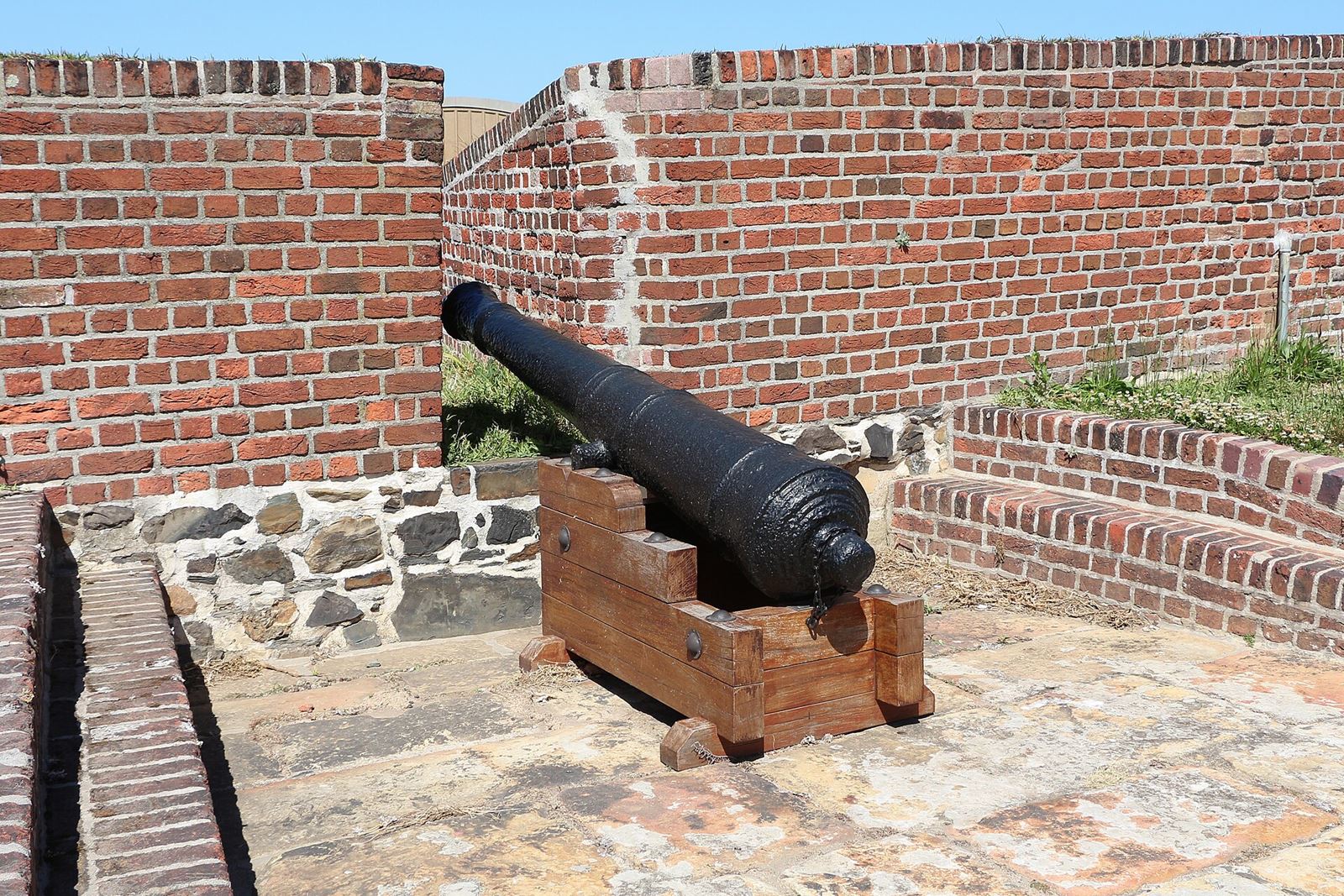
Castle of Good Hope
About Castle of Good Hope
On the edge of the Grand Parade, in the heart of Cape Town, stands a massive five-pointed stone fortress with walls painted a warm yellow. The Castle of Good Hope was built by the Dutch East India Company between 1666 and 1679, and it is the oldest surviving colonial building in South Africa. For more than three centuries it has been a fort, a seat of government, a prison and a military headquarters. Today it is also a museum, and one of the most fascinating places in the city to step back into Cape Town's early history — only a short walk or drive from Bo-Kaap.
From mud fort to stone castle
When Jan van Riebeeck arrived at the Cape in 1652 to set up a refreshment station for the Dutch East India Company (the VOC), his men built a small fort of earth and timber near the shore. It was constantly damaged by winter rains. In the 1660s, with tensions rising between the Netherlands and England, the VOC decided to replace it with a proper stone fortress. Building began in 1666, and the work was carried out by soldiers, sailors, enslaved people and Khoikhoi labourers. The castle was completed in 1679.
When it was built, the castle stood right on the shoreline, and waves broke against its walls. Since then, land reclaimed from the sea has pushed the harbour far to the north, so the castle now stands well inland among the streets of the city.
The five bastions
The castle is a pentagon, with a pointed bastion at each corner — a design typical of European forts of the time, which allowed defenders to cover every wall with crossfire. The bastions are named after the titles of the Prince of Orange: Leerdam, Oranje, Nassau, Catzenellenbogen and Buren. You can walk along the walls between them and look out over the city towards Table Mountain and the harbour.
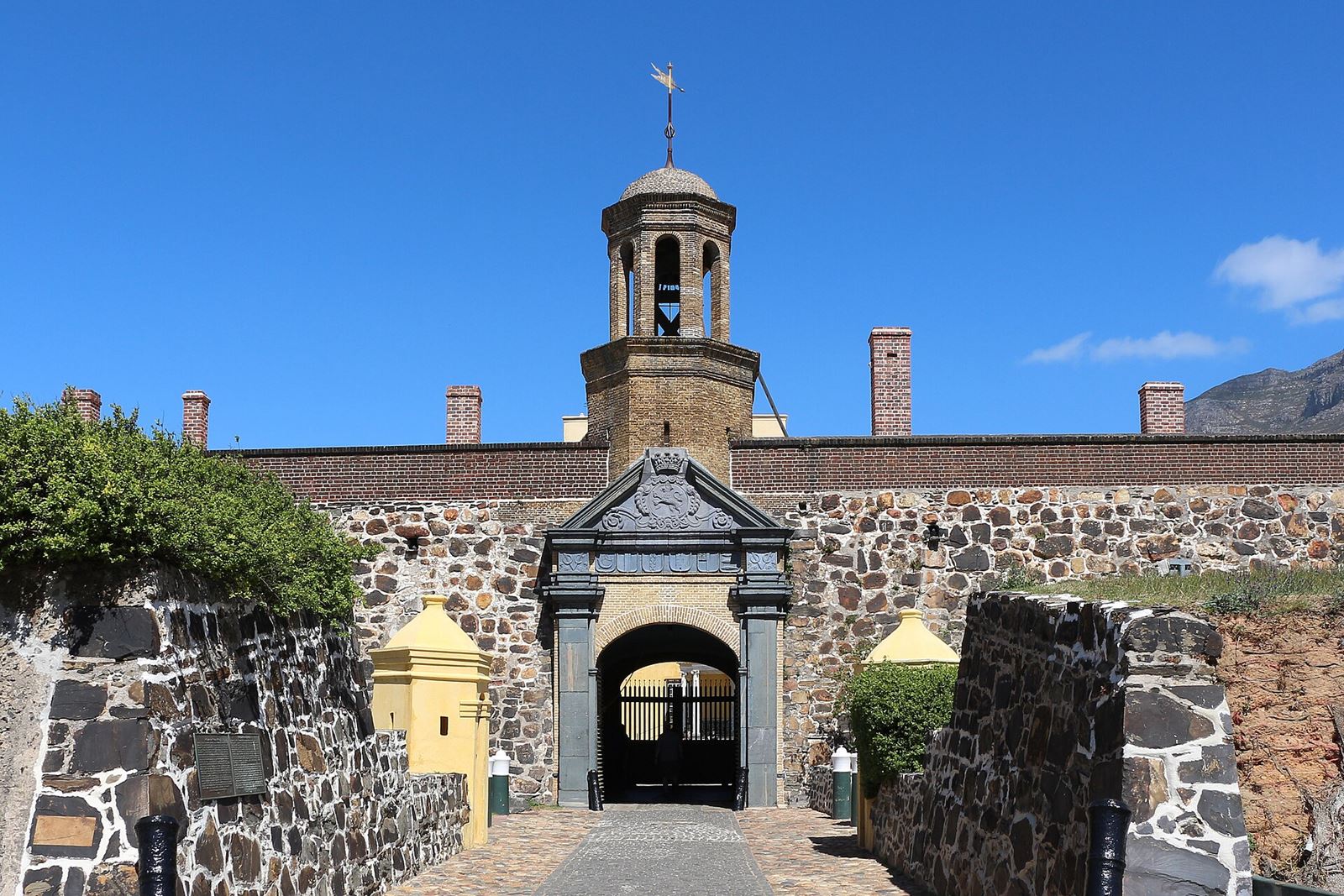
The main entrance faces the city through a stone gateway topped by a bell tower. The bell, cast in Amsterdam in 1697, is said to be the oldest in South Africa. It was rung to announce the time, to warn of danger and to call residents to important announcements.
What to see inside
- The William Fehr Collection — paintings, furniture, ceramics, glass and metalwork from the 17th to 19th centuries, giving a rich picture of life at the Cape in the colonial period. The paintings of Table Bay and early Cape Town are especially interesting.
- The Military Museum — weapons, uniforms and displays on the history of the castle and of the soldiers who served here.
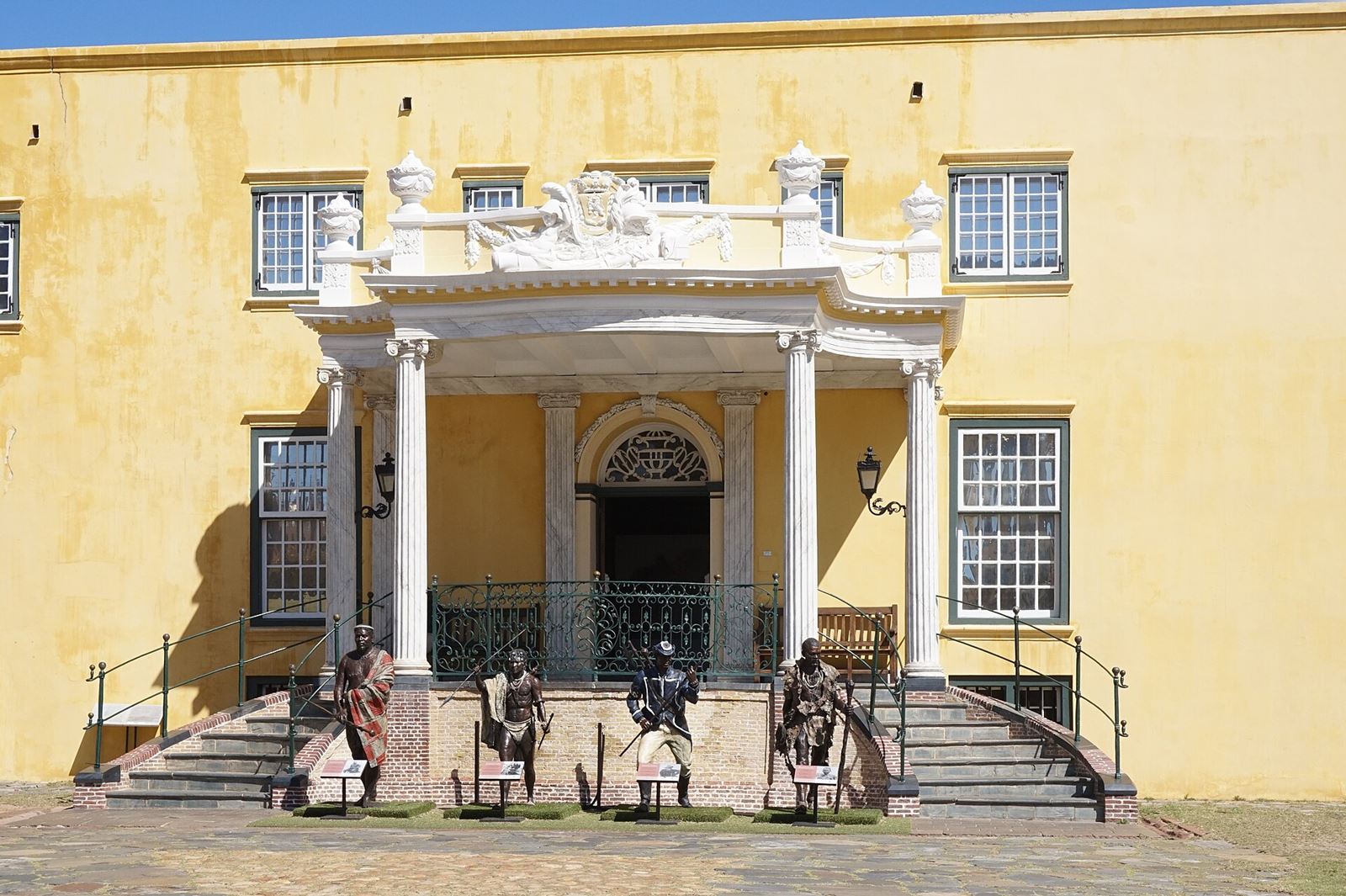
- The De Kat balcony — an elegant balcony in the middle of the castle, from which governors' proclamations were once read to the people gathered in the courtyard below.
- The cells — the dark, cramped dungeons beneath the walls, where prisoners were held in grim conditions, are a sobering reminder of the castle's darker past.
- The Dolphin Pool — a restored ornamental pool and garden in the inner courtyard, based on descriptions and drawings from the 18th century.
Ceremonies
On weekdays the castle has traditionally held a Key Ceremony and a changing of the guard, in which soldiers in historical uniform march across the courtyard, with the firing of a signal cannon. These are popular with families and photographers. Times and days change from time to time, so check the castle's official information before you plan your visit around them.
The Grand Parade
Just outside the castle is the Grand Parade, Cape Town's oldest public square, once used for military parades and now home to market stalls. It is overlooked by the grand Edwardian City Hall. On 11 February 1990, on the day of his release after 27 years in prison, Nelson Mandela gave his first public speech as a free man from the balcony of the City Hall to a huge crowd gathered on the Parade. A statue of Mandela now stands on the balcony.
Planning your visit
Allow one and a half to two hours to explore the castle, its museums and its walls. Wear comfortable shoes, as there are steps and uneven surfaces, and bring water on hot days — the courtyards can be very sunny. There is usually a café on site. The castle is within walking distance of the District Six Museum on Buitenkant Street, so the two are easy to combine. Check opening hours and entry fees before you go, especially on public holidays.
Getting there from Bo-Kaap
From Bo-Kaap, walk down Wale Street to Adderley Street, continue through the city centre past the Grand Parade, and you will see the castle walls ahead. The walk takes about twenty to twenty-five minutes. Alternatively, it is a five to ten minute ride by car or ride-hailing app, and the castle is close to Cape Town station and several MyCiTi bus stops.
Make it part of a history walk
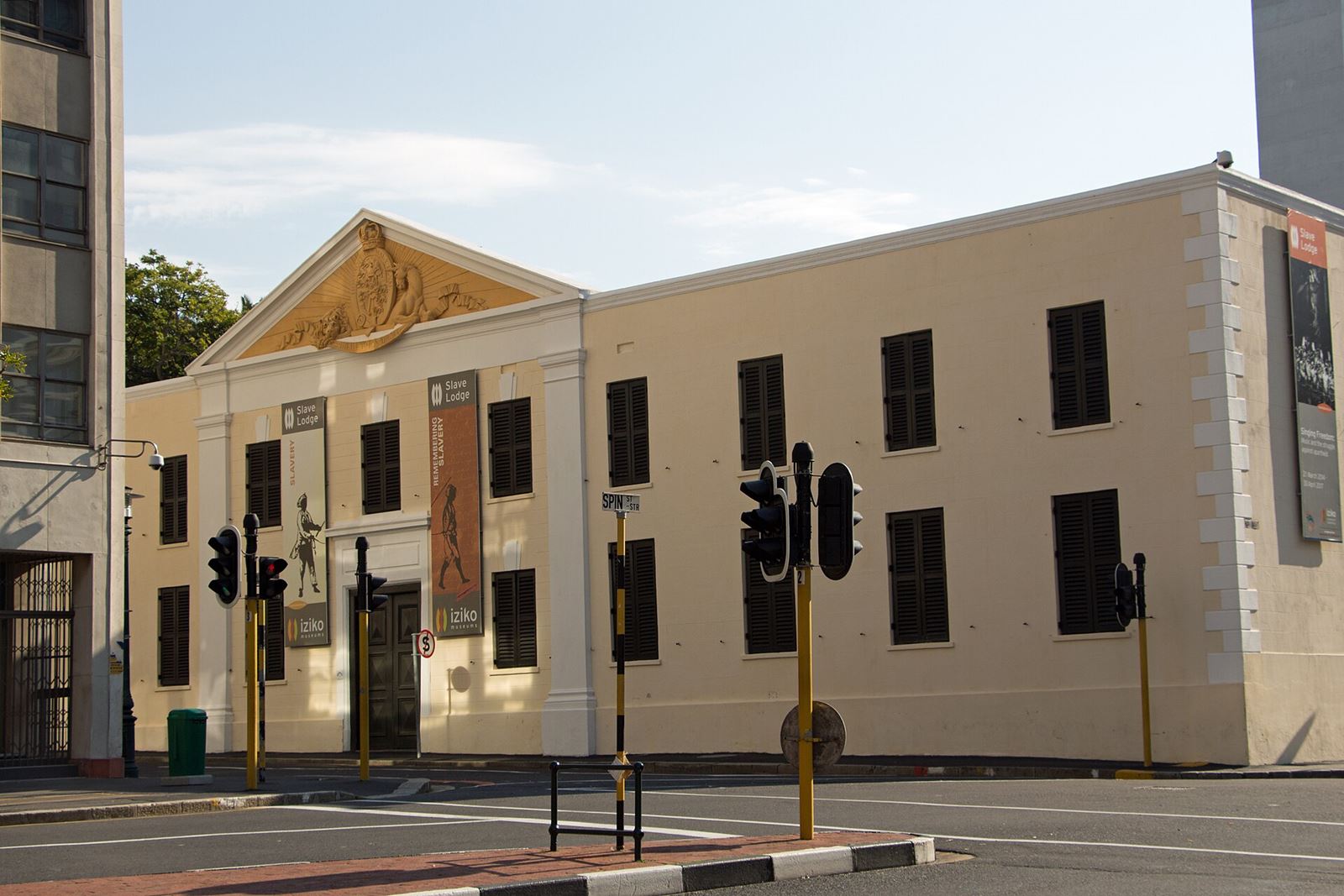
The Castle of Good Hope is a key stop on a walking route through the history of Cape Town. Start in Bo-Kaap at the Bo-Kaap Museum and the Auwal Mosque, continue to the Slave Lodge and the Company's Garden, then walk on to the castle and the District Six Museum. Together these sites tell the story of the city from the first Dutch fort to the end of apartheid. Finish with a meal back in Bo-Kaap — our guide to Cape Malay cuisine and list of restaurants will help you choose — and see our attractions page for more ideas.
Photos via Wikimedia Commons: Bernard Gagnon (photo 1, photo 2, photo 3), CC BY-SA 4.0.
Frequently asked questions
How old is the Castle of Good Hope?
What is there to see at the Castle of Good Hope?
How long does a visit to the Castle take?
Is the Castle of Good Hope near Bo-Kaap?
Why is the Castle shaped like a star?
Location
Castle of Good Hope, Buitenkant Street, Cape Town
Share your experience of Castle of Good Hope
Reviews are written by signed-in Google account holders so every review comes from a real person.
Sign in with Google to review