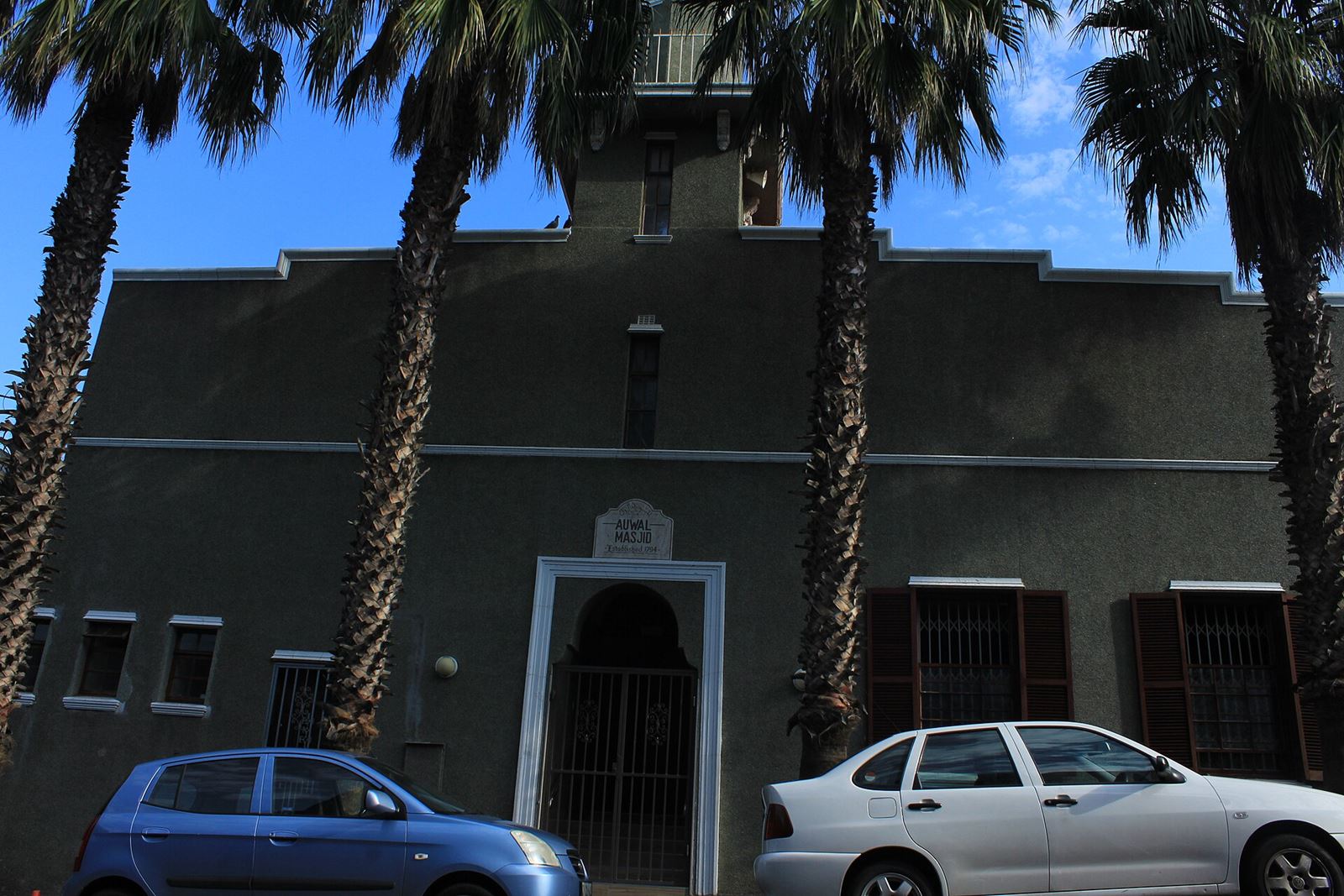
Auwal Mosque
About Auwal Mosque
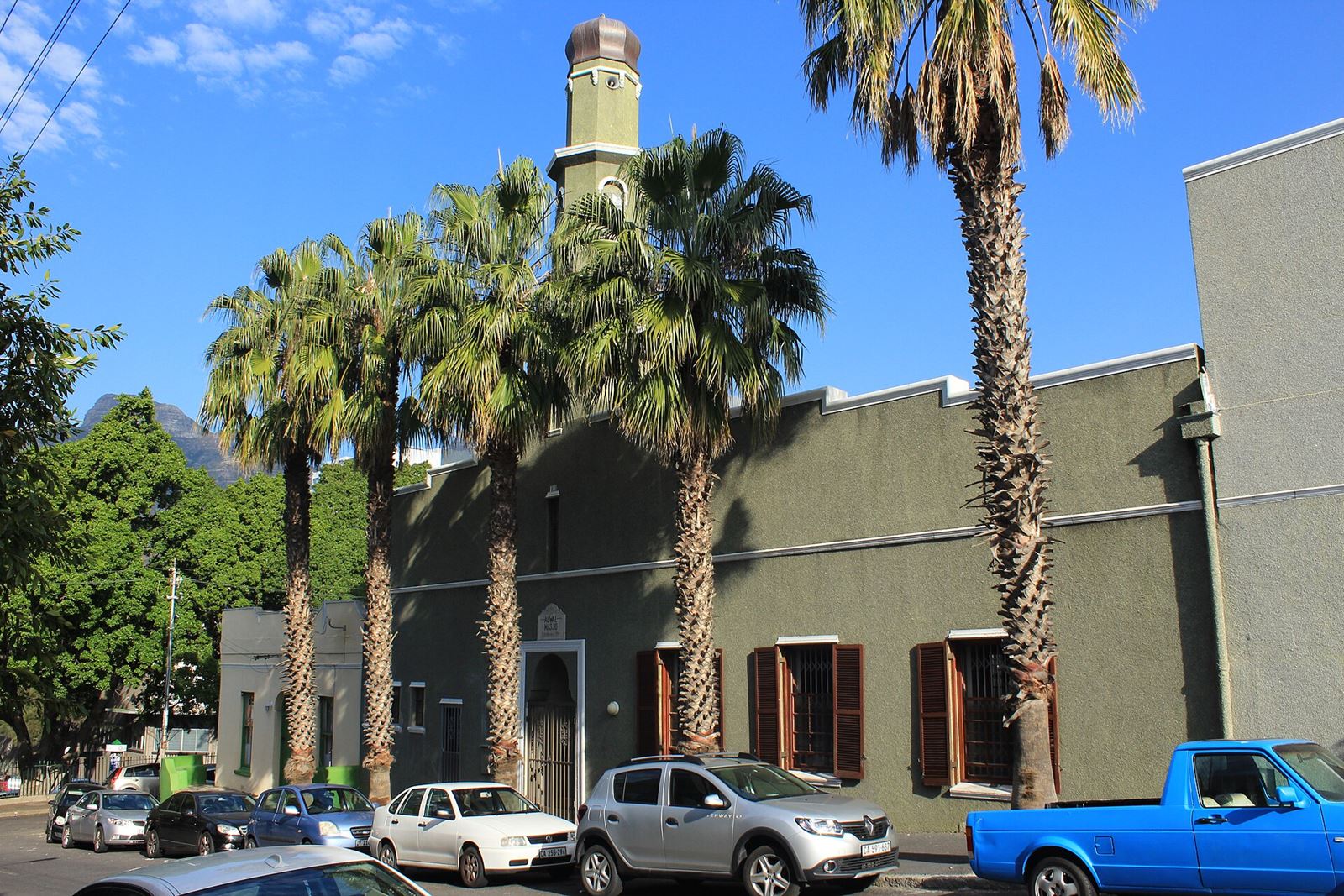
On Dorp Street, a few minutes' walk from the busiest corner of Bo-Kaap, stands a modest white mosque with a slender minaret. This is the Auwal Masjid — "auwal" means "first" — founded in 1794 and regarded as the first mosque in South Africa. More than two centuries later it is still a living place of worship, where the call to prayer rings out over the rooftops five times a day. For the Muslim community of the Cape it is a deeply important place, and for visitors it offers a window into the faith and history that shaped Bo-Kaap.
Islam at the Cape
Islam arrived at the Cape with the Dutch East India Company's ships. Among the enslaved people brought from Indonesia, Malaysia, India and elsewhere were many Muslims, and the VOC also banished political prisoners and religious leaders from the East to the Cape, among them nobles and scholars who had resisted Dutch rule. For more than a century, Muslims were not allowed to worship in public. Prayers were held in private homes and in the quarries on the slopes of Signal Hill, and faith was passed on quietly from one generation to the next.
Tuan Guru and the founding of the mosque
The story of the Auwal Mosque is closely tied to Imam Abdullah ibn Qadi Abdus Salaam, known to the community as Tuan Guru, meaning "Mister Teacher". A prince and scholar from Tidore, in the Maluku Islands of present-day Indonesia, he was exiled to the Cape by the Dutch and imprisoned on Robben Island from 1780 to 1793. During his years on the island he is said to have written out copies of the Qur'an from memory, together with a book on Islamic law and belief that was used to teach the community for generations.
After his release, Tuan Guru settled in what is now Bo-Kaap. In 1793 he opened a madrasah — a religious school — in Dorp Street, which taught enslaved and free children to read and write, and in 1794 the community established a mosque nearby. Full freedom of worship for Muslims at the Cape only followed in 1804, which makes the founding of the Auwal Mosque a remarkable act of faith and determination. Tuan Guru died in 1807 and is buried in the Tana Baru cemetery at the top of Longmarket Street, where his kramat (shrine) is still visited today.
The mosque today
The building has been altered and restored several times over the centuries, and from the outside it is simple and unassuming compared with some of the grander mosques built later. Inside it is calm and beautifully kept. Handwritten copies of the Qur'an associated with Tuan Guru are treasured by the community and are among the most precious heirlooms of Islam in South Africa. The mosque remains a working place of worship and a centre of community life in Bo-Kaap, especially during Ramadan, when the streets fill with families gathering to break the fast and neighbours exchange plates of food at sunset.
Bo-Kaap has several other historic mosques within a few streets of each other, including the Nurul Islam Mosque and the Jamia Mosque. Walking between them is one of the best ways to understand how central faith has always been to life in the neighbourhood.
Visiting respectfully
Visitors of all faiths are welcome to see the mosque from outside, and many walking tours of Bo-Kaap stop here. If you would like to go inside, it is best to visit with a local guide or to ask at the mosque whether someone is available to show you around. Please keep the following in mind:
- Avoid prayer times, especially the Friday midday prayer (Jumu'ah), when the mosque is full.
- Dress modestly. Cover your shoulders and knees; women should bring a scarf to cover their hair inside the prayer hall.
- Remove your shoes before entering the prayer area.
- Keep your voice low and ask before taking photographs, especially of people at prayer.
- Remember that this is a place of worship first and a heritage site second.
The circle of kramats
Tuan Guru's grave is one of the kramats — the shrines of saints and scholars — that form a "circle" around Cape Town. Others stand on Signal Hill, on Robben Island, in Constantia and at Macassar, where the grave of Sheikh Yusuf, one of the most important early Muslim leaders at the Cape, is found. According to local tradition, this circle of shrines protects the city. Visiting a kramat is a quiet, respectful experience; the same etiquette applies as at the mosque.
Exploring Muslim heritage in Bo-Kaap
The Auwal Mosque is a natural part of any walk through Bo-Kaap. Combine it with the Bo-Kaap Museum on Wale Street, which shows how a Cape Malay family lived in the 19th century, and with the Slave Lodge at the bottom of the hill, which tells the story of the enslaved people who brought Islam to the Cape. Then sit down to the food that grew out of the same history: read our guide to Cape Malay cuisine in Bo-Kaap and use our halal guide to find halal restaurants and Muslim-friendly places to stay nearby.
Photos via Wikimedia Commons: Sami Mlouhi (photo 1, photo 2), CC BY-SA 4.0.
Frequently asked questions
Why is the Auwal Mosque important?
Can non-Muslims visit the Auwal Mosque?
What should I wear to visit a mosque in Bo-Kaap?
Who was Tuan Guru?
Where is the Auwal Mosque?
Location
Dorp Street, Bo-Kaap, Cape Town
Share your experience of Auwal Mosque
Reviews are written by signed-in Google account holders so every review comes from a real person.
Sign in with Google to review