Table Mountain
About Table Mountain
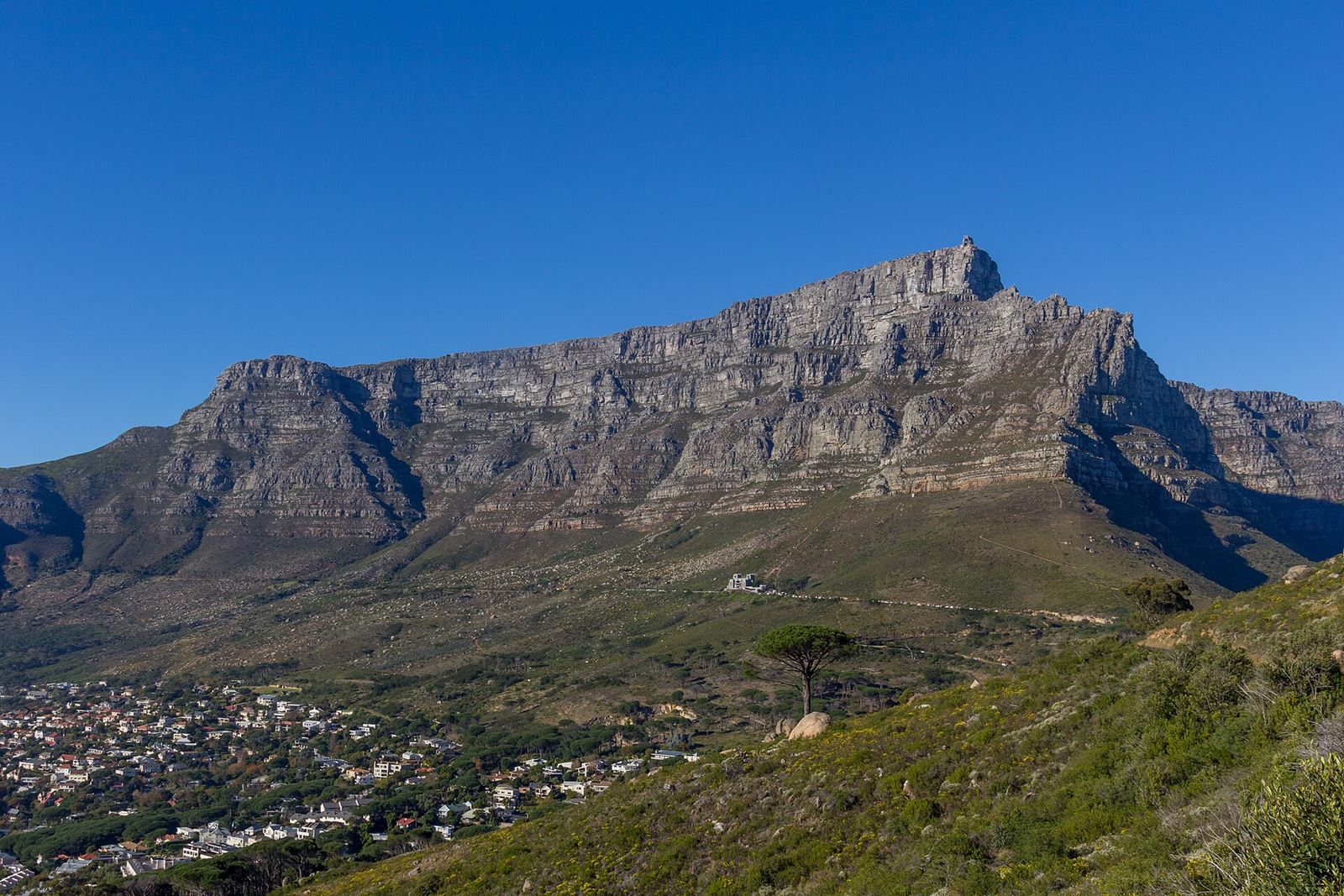
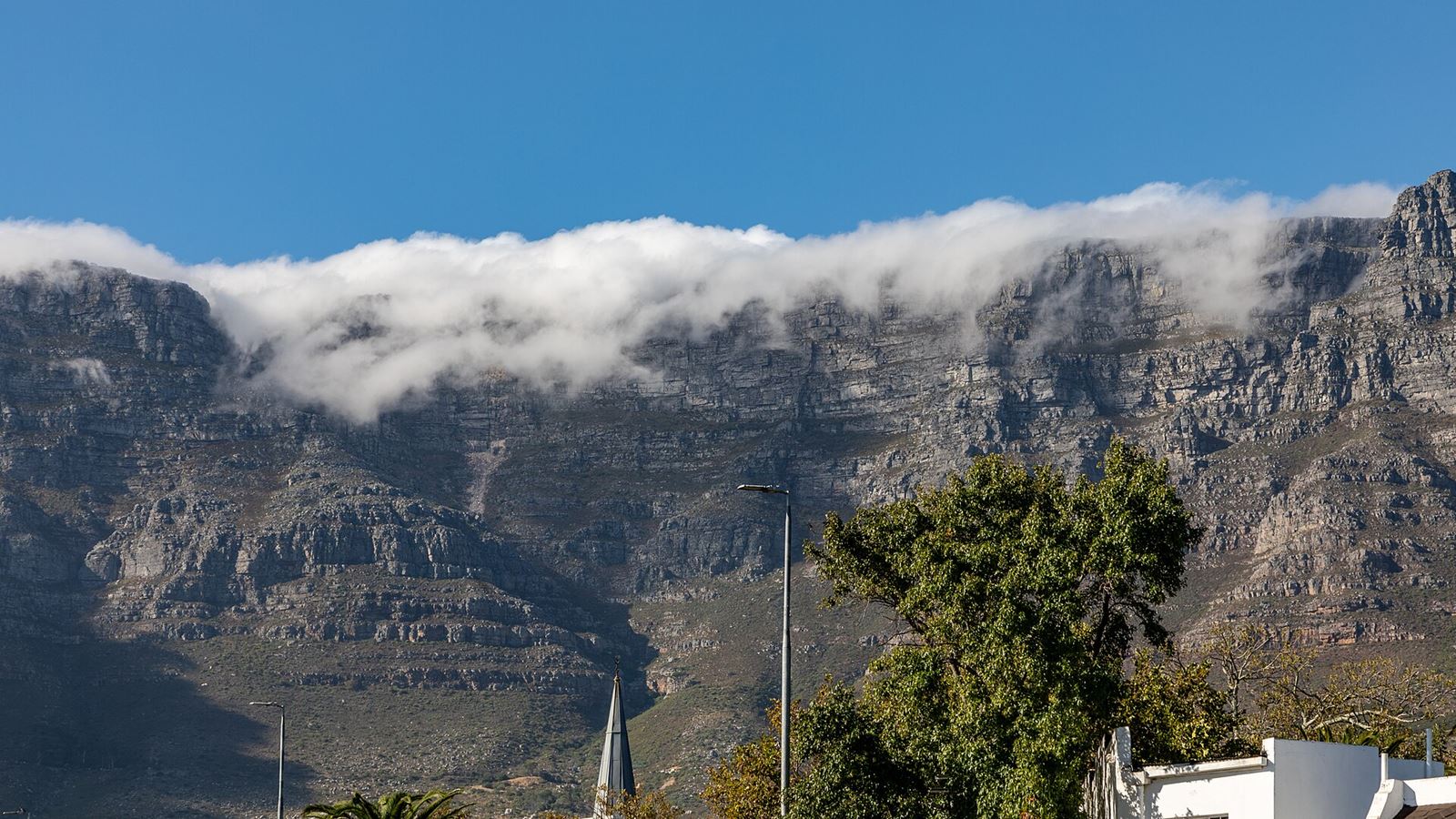
Table Mountain is the backdrop to almost every view in Bo-Kaap. From the cobbled streets of the old Malay Quarter you look straight up at its long, flat summit, often draped in the white "tablecloth" of cloud that pours over the edge when the south-easter blows. It is Cape Town's best-known landmark, the heart of Table Mountain National Park and one of the New7Wonders of Nature. For anyone staying in Bo-Kaap it is also remarkably close: the lower cable station and the main hiking trails on Tafelberg Road are only a 10 to 15 minute drive from the colourful houses of Wale Street.
Why Table Mountain is so special
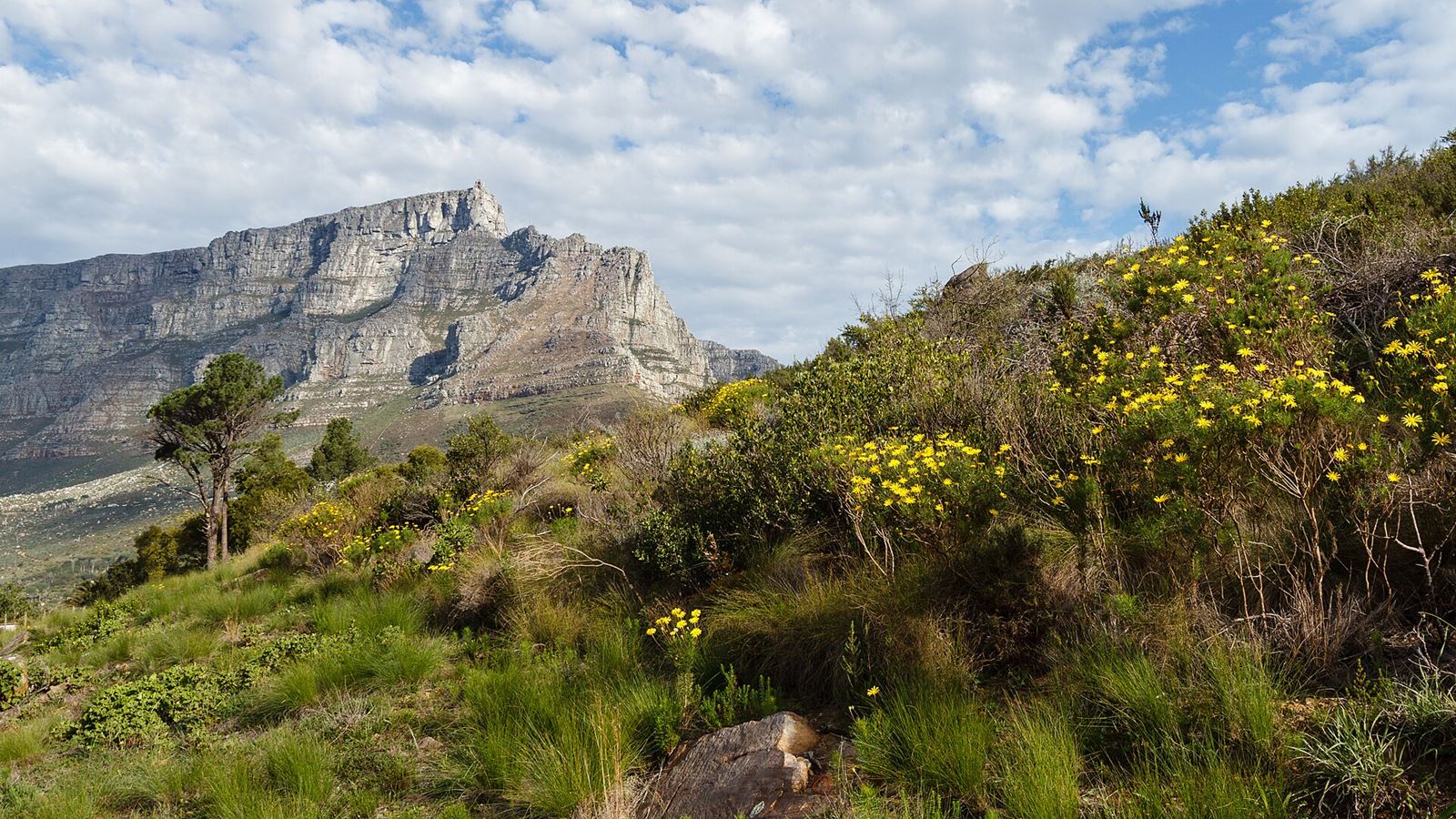
The mountain's sandstone plateau stretches for around three kilometres between Devil's Peak and Lion's Head, and its highest point, Maclear's Beacon, stands at roughly 1,086 metres above sea level. The rock layers were laid down hundreds of millions of years ago, which makes Table Mountain one of the oldest mountains on Earth — far older than the Himalayas or the Alps. Its flat top is the result of that hard sandstone resisting erosion while the softer rock around it wore away.
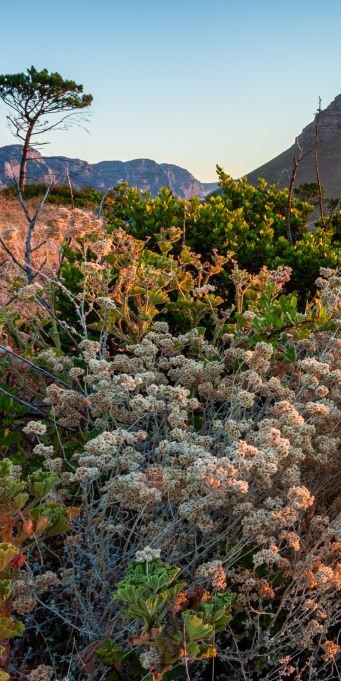
It is also a botanical treasure. Table Mountain lies within the Cape Floral Region, a UNESCO World Heritage Site, and its slopes are covered in fynbos — the fine-leaved shrubland of proteas, ericas and restios that grows almost nowhere else in the world. More than 2,000 plant species have been recorded on the mountain, more than in the whole of the British Isles, and many of them are found only here. Look out for dassies (rock hyraxes) sunbathing on the rocks near the upper cable station, sunbirds feeding on proteas and, on quieter trails, lizards and the occasional tortoise.
Getting to the top: cable car or on foot
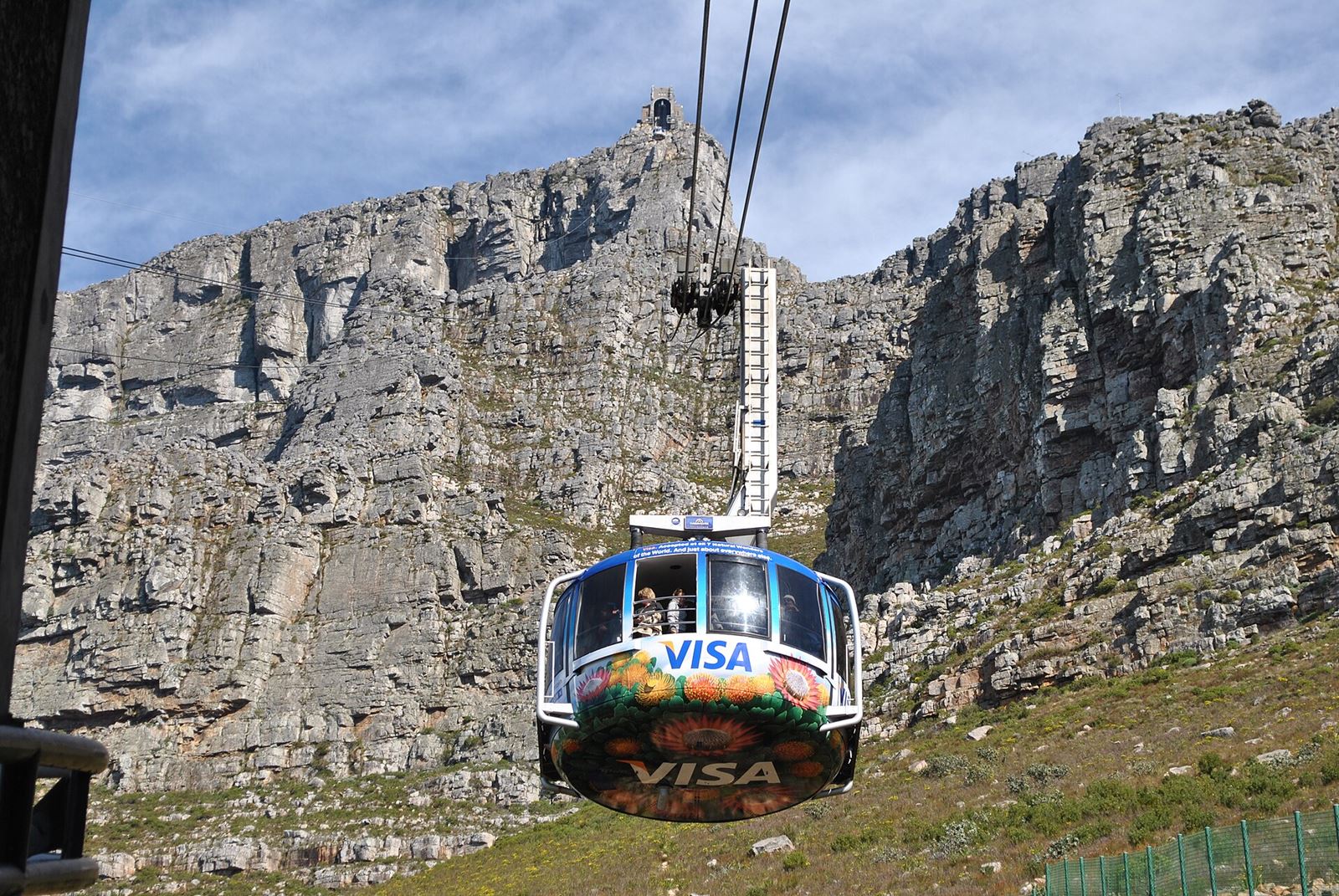
There are two ways up. The easiest is the Table Mountain Aerial Cableway, whose rotating cars carry you from Tafelberg Road to the summit in about five minutes, turning a full circle on the way so everyone gets the view. The cableway only runs when the weather allows, so check that it is operating on the day you plan to go.
The second way is to hike. Dozens of routes climb the mountain, from steep but straightforward paths to serious scrambles that are best done with a qualified guide. Many visitors walk up and take the cable car down, which saves the knees and lets you enjoy the summit without worrying about the descent. If you plan to do this, remember that the cable car can stop at short notice in high wind, so always be prepared to walk down.
The best hiking routes up Table Mountain
- Platteklip Gorge — the most direct and popular route, starting on Tafelberg Road a short walk east of the lower cable station. It is a steep, steady climb up a staircase of rock steps through the gorge that splits the front face. A reasonably fit walker needs about two to three hours to the top. There is very little shade, so start early.
- India Venster — a more adventurous route that starts near the lower cable station and climbs the front face beneath the cable car. It involves real scrambling, with metal staples in some places, and is not suitable for anyone uncomfortable with heights. Go with someone who knows the route or a registered guide.
- Skeleton Gorge — a beautiful, shaded climb from Kirstenbosch Gardens through indigenous forest, with wooden ladders and boulders near the top. It reaches the "back table" near the reservoirs and Maclear's Beacon. Many hikers return via Nursery Ravine to make a loop.
- Kasteelspoort — a route from the Camps Bay side with sweeping views of the Twelve Apostles and the Atlantic Ocean, and a famous flat rock that juts out over the drop and makes a spectacular photo spot.
Whichever route you choose, follow the marked paths and do not attempt to take shortcuts — most accidents on the mountain happen when hikers leave the trail or are caught out by the weather.
When to visit
Summer (roughly November to March) is dry and warm, but this is also the season of the strong south-easterly wind that brings the tablecloth and can close the cableway. Autumn (March to May) often has the calmest, clearest days and is many locals' favourite time to hike. Winter (June to August) brings cold fronts and rain, but the clear, crisp days between them can be magnificent, with fewer people on the trails.
At any time of year, early morning is the best time to start: it is cooler, the light is soft and the queues and car parks are quieter. Sunset from the summit is unforgettable, but plan your way down carefully and check the time of the last cable car.
What to bring and how to stay safe
Table Mountain is right next to a city, which makes it easy to underestimate. The weather can change within minutes, and cloud can roll in and hide the paths. Bring at least one to two litres of water per person, a hat, sunscreen, snacks and a warm, windproof layer even on a hot day. Wear proper walking shoes, carry a charged phone and tell someone where you are going. Hike in a group rather than alone, stay on the main routes, and turn back if the weather closes in. Before you set out, save the emergency numbers published by SANParks and the local mountain rescue service. Leave valuables at home, and never leave anything visible in a parked car on Tafelberg Road.
On the summit
Short walkways around the upper cable station lead to viewpoints over the City Bowl, Table Bay and Robben Island to the north, Lion's Head and the Twelve Apostles to the west, and the Cape Peninsula stretching south. There is a café and a shop near the cable station, and benches where you can sit and watch the clouds move across the plateau. If you have time and good weather, the walk across the top towards Maclear's Beacon shows a much wilder side of the mountain.
Table Mountain from Bo-Kaap
Staying in Bo-Kaap puts you closer to the mountain than almost anywhere else in the city — on a clear morning you can watch the light move across the cliffs from your window. Make a day of it: hike or ride up in the morning, come down for a Cape Malay lunch at one of the restaurants in Bo-Kaap, then watch the sunset from Signal Hill. On another day, climb Lion's Head for a different angle on the mountain. Browse places to stay in Bo-Kaap to be close to it all, and see our full list of things to do in and around Bo-Kaap.
Photos via Wikimedia Commons: Mike Peel (www.mikepeel.net), CC BY-SA 4.0; Dietmar Rabich, CC BY-SA 4.0; Pierre-Selim Huard, CC BY 4.0.
Frequently asked questions
How long does it take to hike up Table Mountain?
Is it free to hike Table Mountain?
How far is Table Mountain from Bo-Kaap?
What is the Table Mountain "tablecloth"?
When is the best time to go up Table Mountain?
Opening hours
Open every day. Hiking trails are best started early in the morning; check the weather and wind before you go.
Hours can change on public holidays and during Ramadan — call ahead to be sure.
Location
Tafelberg Road, Table Mountain National Park, Cape Town
Share your experience of Table Mountain
Reviews are written by signed-in Google account holders so every review comes from a real person.
Sign in with Google to review