
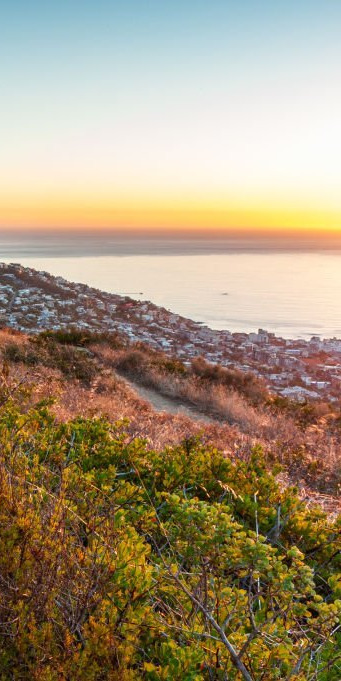
Lion's Head
About Lion's Head
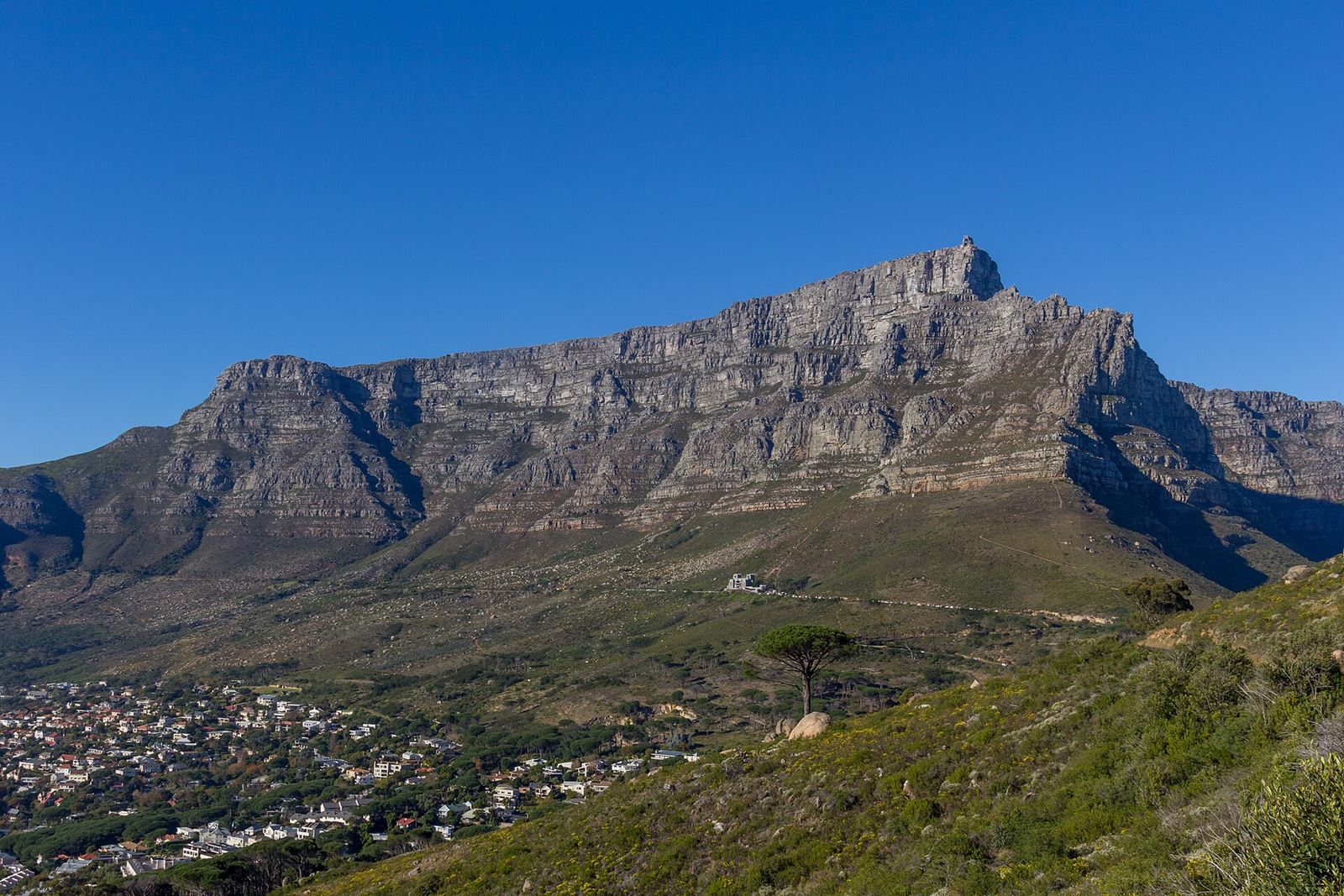
Lion's Head is the sharp, rocky peak that rises between Table Mountain and Signal Hill, and the hike to its summit is the favourite short climb of Capetonians and visitors alike. At 669 metres it is much lower than Table Mountain, but the views from the top are among the best in the city: a full 360-degree panorama over the Atlantic beaches of Camps Bay and Clifton, the Twelve Apostles, the City Bowl, Table Bay, Robben Island and the face of Table Mountain itself. From Bo-Kaap, the start of the trail is only about ten minutes away by car, so you can easily fit a sunrise or sunset hike into a busy day.
How Lion's Head got its name
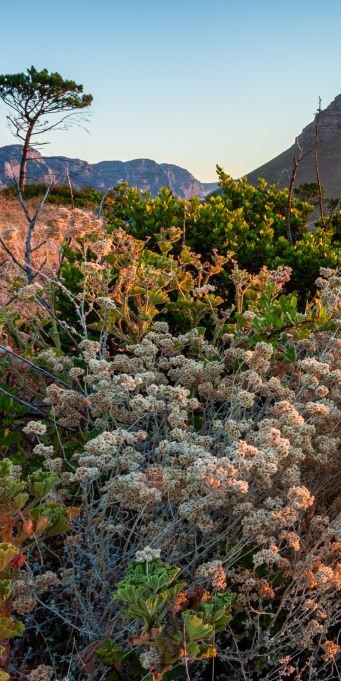
Seen from the city side, Lion's Head and Signal Hill together look like a crouching lion, with the peak as its head and the long, flat Signal Hill as its body. Early Dutch settlers called the peak Leeuwen Kop and Signal Hill the Lion's Rump, and the names stuck. The peak forms part of Table Mountain National Park, and its slopes are covered in fynbos that flowers in different colours through the year.
The route
The main trail starts on Signal Hill Road, just above Kloof Nek, and winds around the mountain in a spiral, so as you climb you see the view change from the city to the Atlantic coast and back again. The round trip is about five to six kilometres. Most hikers take between one and one and a half hours to reach the top, and two to three hours for the whole outing, including time at the summit.
The lower part of the path is a wide gravel track with a gentle gradient. Higher up it becomes narrower and rockier, with some steep steps. Near the top, the path splits: one option climbs a short section with chains and metal ladders bolted into the rock, while the other continues around the mountain on a steeper but chain-free path. Both meet again for the final scramble over rocks to the summit. If you are not confident with heights, take the route without chains — it is longer but less exposed.
Sunrise, sunset and full-moon hikes
Lion's Head is famous for its sunrise and sunset hikes. At sunrise you watch the sun come up behind the mountains of the Hottentots-Holland range across the Cape Flats, while the city below slowly lights up. At sunset the sun drops into the Atlantic beyond the Twelve Apostles and the sky turns orange and pink. Once a month, on the night of the full moon, hundreds of people climb the mountain to watch the moon rise as the sun sets — a wonderful experience, but expect crowds and queues at the chains.
For any hike in the dark, bring a good headlamp or torch for every person, go with a group and stay on the main path. Allow extra time for the descent, which is slower in the dark.
What to bring
- At least one litre of water per person — there is no water on the mountain.
- Comfortable walking shoes with good grip; the rock can be slippery, especially after rain.
- A warm, windproof layer: the summit is exposed and often much windier and cooler than the city.
- Sunscreen and a hat in summer, as there is almost no shade.
- A headlamp or torch for early-morning, evening and full-moon hikes.
- A charged phone with emergency numbers saved, and a small snack for the top.
Staying safe on Lion's Head
Lion's Head is popular and well used, but it is still a mountain. Every year people are injured, usually by slipping on the upper rocky section or by getting caught out in the dark. Stay on the marked path, do not attempt to scramble down off-route, and turn back if the wind is too strong near the top. Hike with others rather than alone, especially early in the morning or after dark. Avoid carrying valuables, and leave nothing visible in your car — parking along Signal Hill Road fills up quickly on busy days, and some hikers prefer to take a taxi or ride-hailing app from Bo-Kaap instead.
When to go
The best conditions are on clear, calm days. In summer, start early in the morning before the heat and the south-easter pick up, or go for sunset. Autumn and spring bring pleasant temperatures and good visibility. In winter, pick a dry day between cold fronts — the path can be slippery after rain. Weekends and public holidays are busiest, so go on a weekday if you prefer a quieter trail.
From the summit
The view from the top is the reward. Looking south you see the Twelve Apostles running along the coast towards Llandudno and the Cape Peninsula. Below you lie the white beaches of Clifton and Camps Bay, with Sea Point and Green Point to the north and the stadium beside the sea. To the east the whole of the City Bowl spreads out beneath Table Mountain — and if you look closely, you can pick out the colourful roofs of Bo-Kaap on the slopes of Signal Hill. You will often see paragliders launching from the lower slopes and drifting down towards Sea Point.
Combine it with other sights near Bo-Kaap
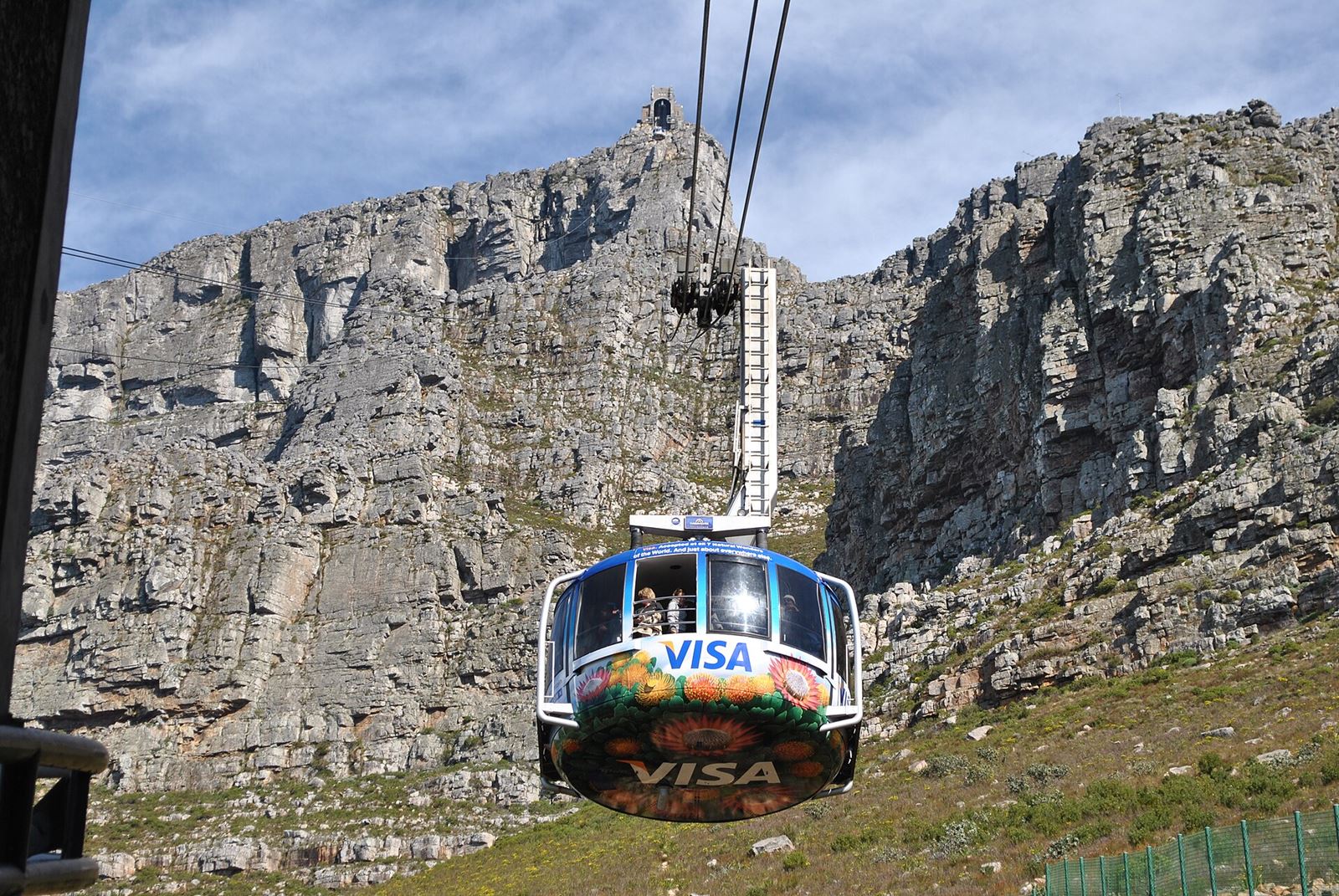
Lion's Head pairs well with a morning on Table Mountain or a ride on the cable car, or with a picnic and the sunset on Signal Hill, which is just along the road. After an early hike, head back to Bo-Kaap for breakfast or a Cape Malay lunch — browse our list of restaurants in Bo-Kaap and our halal guide, and find somewhere to stay on our accommodation page.
Frequently asked questions
How long does it take to hike Lion's Head?
Is the Lion's Head hike difficult?
Where does the Lion's Head hike start?
Can you hike Lion's Head at night or at full moon?
Do you have to pay to hike Lion's Head?
Opening hours
Open every day. Start early in summer; hike in a group with torches for sunrise, sunset and full-moon hikes.
Hours can change on public holidays and during Ramadan — call ahead to be sure.
Location
Lion's Head trailhead, Signal Hill Road, Kloof Nek, Cape Town
Share your experience of Lion's Head
Reviews are written by signed-in Google account holders so every review comes from a real person.
Sign in with Google to review