
The Colourful Houses of Bo-Kaap: The Story Behind Cape Town’s Brightest Streets
17 November 2026
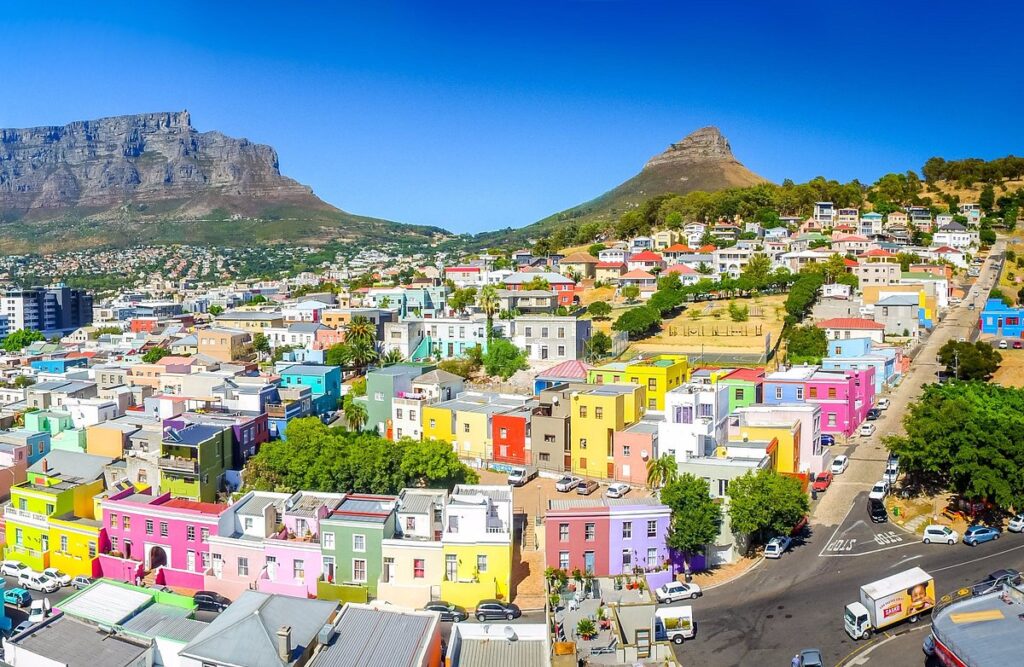
Few streets in South Africa are photographed as often as those of the Bo-Kaap. Rows of houses painted lime green, hot pink, turquoise, canary yellow and cobalt blue step down the slopes of Signal Hill towards the city centre, their white parapets bright against the sky. For visitors they are an unmissable sight. For the families who live behind the colourful façades they are simply home, and every one of them is part of a story that stretches back more than 250 years.
Rental cottages on the slopes of Signal Hill
The Bo-Kaap, whose name means “above the Cape”, began as a housing scheme. In 1760 Jan de Waal bought land at the foot of Signal Hill, between what are now Dorp and Wale Streets, and a year later he added a neighbouring piece of land. From 1763 he began building small rental houses, known in Dutch as huurhuisjes, which were let to enslaved and working people of the growing town. For a time the area was even known as Waalendorp, after its developer.
One of those first houses survives at 71 Wale Street. Built in the 1760s, it is the oldest house in the area still in its original form, and today it is home to the Bo-Kaap Museum, with nineteenth-century furnishings that show how a Cape Muslim family once lived.

Most of the neighbourhood was built between about 1790 and 1825, largely by and for the artisans of Cape Town: builders, carpenters, tailors and other craftsmen. After slavery ended at the Cape in 1834, many freed people settled here, and developers added long rows of narrow, deep houses to meet the demand. Many residents were Muslim, descended from people brought to the Cape from the Indonesian archipelago, India, Sri Lanka, Madagascar and East Africa, which is why the area became known as the Malay Quarter. Their faith bound the community together, and mosques such as the Auwal Mosque on Dorp Street became its heart.
Reading a Bo-Kaap façade
Look past the paint and you will see the same elegant elements repeated along every street. Most houses are single-storey with flat roofs. Their fronts are topped by parapets, some straight and some gracefully curved, decorated with mouldings. Many have a stoep, a raised front terrace with a low wall and a built-in seat at each end, where neighbours have sat and talked for generations. Above the doors you will often find fanlights, and the windows are divided into small panes of glass.
The houses were built from sun-dried bricks laid in mud mortar on stone foundations, then protected with lime plaster and limewash. Yellowwood beams carried the roofs, which were waterproofed with a whale-oil mixture and, later, with tar. The architecture blends the Cape Dutch tradition with the Georgian proportions that arrived with British rule, and the long terraces stepping down the hill, every house facing the street, give the Bo-Kaap its distinctive rhythm.
So why are the houses so colourful?
Ask around the Bo-Kaap and you will hear several different answers, and the honest truth is that historians do not fully agree.
The most popular explanation goes back to the days when the houses were rented. Tenants, the story goes, were required to keep their homes white. When residents were finally able to buy their houses, they celebrated by painting them in bright, individual colours as an expression of freedom and ownership. Some tellings link this to the end of slavery in 1834; others to the 1990s, after the Group Areas Act was repealed in 1991 and many families were able to buy the homes they had long rented.
Most historians agree that the saturated shades seen today are relatively recent. The houses were traditionally finished with limewash, which could be tinted in soft colours, and the bold palette that now fills social media feeds appears to have spread mainly in the late twentieth century.
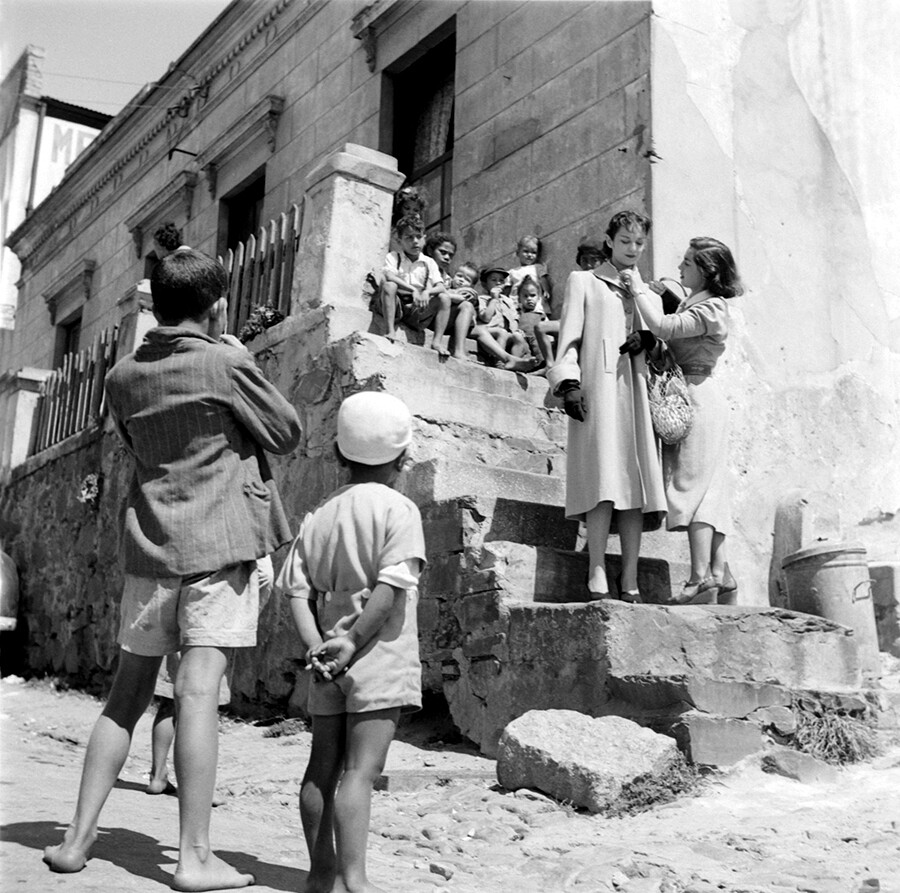
There is also a third, much-loved explanation. According to the Bo-Kaap Museum, Muslim families traditionally freshened up their homes in preparation for Eid, the festival that marks the end of Ramadan. A new coat of paint for the celebrations, often in a cheerful new colour, became part of the rhythm of the year. The custom is less strict than it once was, but repainting remains a source of pride in the community.
Whatever the origin, the colours have become a symbol of identity for a community that has lived through slavery, apartheid and, more recently, the pressures of a booming property market.
Apartheid, restoration and the fight to protect the Bo-Kaap
Under apartheid the Bo-Kaap was declared a “Malay” group area in 1957 under the Group Areas Act, and residents who were not classified as Malay were forced to leave. Unlike nearby District Six, however, the Bo-Kaap was not bulldozed, and its houses and mosques survived. You can read about the very different fate of District Six in our story District Six: Exploring the Rich History of Cape Town’s Iconic Neighbourhood.
The Bo-Kaap’s architecture was recognised early. In 1943 a group of prominent Capetonians, supported by the Historical Monuments Commission, restored fifteen houses. In 1966 part of the area, including houses on Wale, Church, Shortmarket, Rose and Chiappini Streets, was declared a National Monument, and from 1971 the City Council restored dozens more homes and streetscapes.
Since the end of apartheid, the neighbourhood’s location, cobbled streets and views have made it one of the most sought-after addresses in Cape Town. Rising property prices and rates have pushed some long-standing families to sell, and residents have protested against high-rise developments that threaten the area’s character. In March 2019 the City of Cape Town approved a Heritage Protection Overlay Zone covering around 600 homes in the Bo-Kaap, and in May 2019 a number of sites in the area were declared national heritage sites. For many residents, protecting the houses means protecting the community that lives in them.
Visiting the colourful houses
The most photographed stretches are on Wale Street above Buitengracht Street, Chiappini Street, Rose Street and the upper parts of Shortmarket and Longmarket Streets. A few tips will help you make the most of your visit:
- Go early. The morning light is soft, and the streets are quieter before the tour groups arrive.
- Remember it is a neighbourhood. Don’t sit on stoeps, block doorways or lean on cars for a photo, and ask before photographing residents.
- Be respectful near the mosques. Dress modestly and keep the noise down, especially at prayer times.
- Support local businesses. Eat at family-run restaurants, buy spices from the local shops and learn the area’s story at the Bo-Kaap Museum.
Hungry after your walk? Discover Cape Malay cuisine or browse halal restaurants in our Halal Guide. If you would like to stay in the neighbourhood, see our accommodation listings. And to continue exploring the Bo-Kaap’s history, climb to the top of the hill and read about the Tana Baru, the community’s historic burial ground.
The colours of the Bo-Kaap may be relatively young, but the houses beneath them have stood for centuries. Look closely and you will see more than a pretty backdrop: you will see the story of a community that built its homes on the slopes of Signal Hill, kept its faith through slavery and apartheid, and still paints its streets with pride.
Filed under History
More stories
Tana Baru: The Bo-Kaap’s Sacred “New Ground”
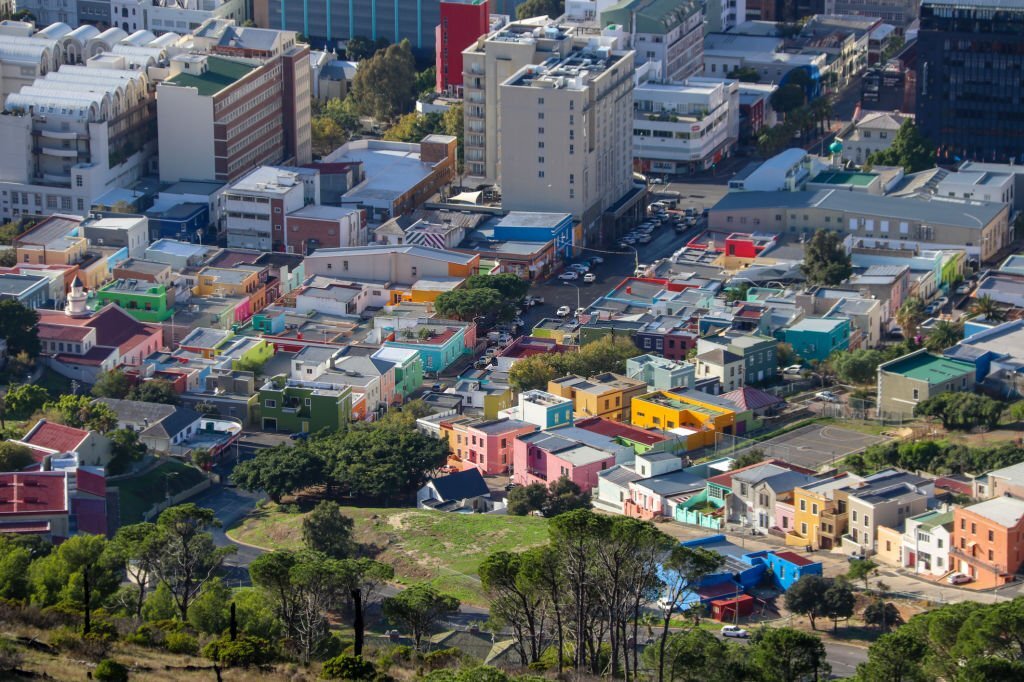
High above the Bo-Kaap lies the Tana Baru, the “new ground” granted to Cape Town’s Muslims in 1805. Regarded as South Africa’s…
Read More »
District Six: Exploring the Rich History of Cape Town’s Iconic Neighbourhood
District Six Introduction Brief history of District Six District Six, a historic neighbourhood located on the outskirts of Cape…
Read More »Discovering the Vibrant Heart of Cape Town City Centre and Bo-Kaap
Introduction Brief history of Bokaap Bokaap, a historic neighbourhood in Cape Town, South Africa, traces its roots back to the…
Read More »